
My New Normal
Lessons Learned in (almost) five years of widowhood

The “new normal” was supposed to be life after the coronavirus pandemic. I’ll defer that reflection for another occasion because coronavirus hasn’t really been on my mind as I have adopted a new normal nearly five years after my wife’s sudden death.
What is it like? Here are a few reflections to give you a sense of my new normal.
Let me begin with a cautionary note. No two people are alike. Another man who became a widower on the same day as me will have his own experience. My environment shaped my new normal.
Life has been stressful and most often too challenging. The closest family member lives two states away and has their own challenges. I don’t have any best friends. I found that I had to do pretty much everything by myself.
I learned that this is true for many people. We are a community of people who reject fairy tales of villages forming around widows.
The solo part of it has upsides and downsides. I cannot account for all of them because I am discovering these all of the time. Example - I have to find someone to drive me when I need medical treatment that prohibits me from driving home. For reference, I have been paying for drivers for my kid when I can’t take her somewhere.
That leads directly to the next issue. How can you get away as a single widowed parent with no family nearby and no besties? Again, I paid people. Eventually, age made it possible for me to go on trips.
Solo vacas are a staple of the new normal. Pluses: you’re the sole governor of your own excursions. I had a lot of fun on a boat tour of Resurrection Bay in Seward (Alaska) and on the wine tour in Florence. Yes, it gets lonely. I am capable of eating out alone. Sometimes, though, it feels like the other patrons’ eyes are piercing your soul.
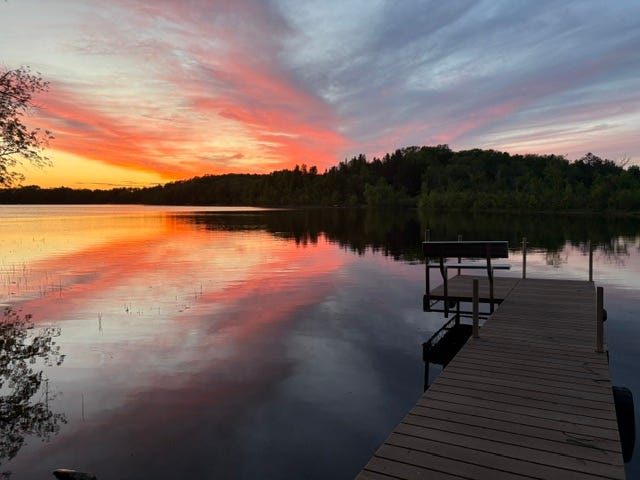
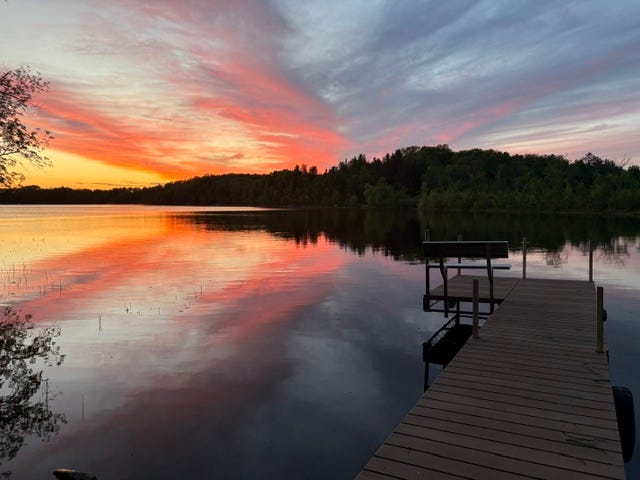
Sunset, Hanging Horn Lake, MN I seldom eat out now.
One of the downsides of solo vacas is outdoor activities. If I get hurt on a hike and biking, I’m screwed.
Coping technique that works for me on solo vacas - do something spontaneous if loneliness gets suffocating. Stay in with junk food and binge watch. Take yourself shopping. One day I went fishing and on another, I got savory food at an ethnic deli.
Sometimes, I receive messages that piss me off. Most people wouldn’t notice it. “You’re invited to dinner. Please bring your spouses!” I see the extra invisible sentence: “you’re going to be the fifth wheel, dude.” No, thanks.
There is no such thing as recovering from grief. The only way for grief to leave would be to stop feeling and loving.
Grief changes so that it doesn’t govern your life. I became functional and social. I could be at a social event and be completely normal and have a surge of sadness run through me just for hearing a song. I could be enjoying a conversation and feeling sad at the very same time.
I can go without crying or feeling the void of loss for a month, even longer.
And then, I might cry for several consecutive days.
Both 11 and 12 are normal and healthy.
Grief doesn’t dry out the capacity to love. I am perfectly capable of loving and being loved. I in fact love another person and can be their companion even when I feel sad.
American society’s stigma on adult singlehood is just sad. Look at the literature - most of it is advice for widowed dating. Being single is just as normal and legit as being married. And being single might be good for some of us who are trying to learn how to live again. A member of the clergy who is single isn’t necessarily destined to be a monastic, though that can happen - it’s between them and God (and their bishop!). And a widow or widower who finds love again and remarries is a source of joy. There are many good and blessed paths after the death of a spouse.
Widowhood has been physical for me. I am feeling tired these days, I think because working and single parenting have made for a challenging combination. I am worried about this.
Do not underestimate the degree to which widowhood can harm one’s health. Wounds to the heart have very serious implications for physical health. It means you have to put yourself first, no matter what.
Comparisons are useless. I don’t know what it’s like to be divorced because I’m not divorced. Some experiences of divorcees sound unimaginably hard - to tell your kids that you are splitting up - to learn of an affair - to hear that the person you chose doesn’t want you any more. I did NOT experience that and don’t know what it’s like. I also don’t know what it’s like to share custody and have a free weekend. I don’t necessarily think that experiencing widowhood is worse than being divorced - they both suck.
I can see why God was pissed at the people of Judea for neglecting orphans and widows. There have been some social security benefits that will elapse when my kid finishes high school, and that is going to hurt. I think a handful of churches have ministries for widows, but even my own church has a program for clergy widows - and this is very good - but no group I know of for clergy widowers. (I need a symbol that denotes I think I know why that is and can’t say it).
Magical thinking is pure fantasy. Religious people are among the worst offenders in perpetuating it. The common refrain that “God won’t give you more than you can handle” is pure BS. Plenty of people have “more than they can handle” in life. I know a lot of widows and widowers whose loneliness is overwhelming. There is no quick fix, no app, because you can’t force social chemistry.
I feel like I woke up from a weird dream and saw the world as it really is. People are hurting. People are stumbling through life, bearing burdens of brokenness in all of its forms - abuse, financial strains, illnesses, homelessness, relationship problems, abject loneliness. They’re doing their best to stumble through life. I hear their stories differently now. I can tell you that they appreciate your ears and your companionship!
One of the things I am learning is that I have more power than I think. Something truly awful happened five years ago, and something wonderful could happen tomorrow. I am learning how to remind myself that, for the most part, the only person who can stop me is me.
My wife’s death changed me, but it didn’t kill me. I’m really glad I’m alive, I still enjoy life, and I also really like people.
Nicholas, this reflection carries such necessary honesty because it refuses the comforting myths people often place around grief, community, and resilience. The way you name the practical loneliness of widowhood, the physical toll, the social awkwardness, the absence of the promised village, and still arrive at a place where life remains meaningful is deeply clarifying. I was especially struck by your line that grief does not leave unless we stop feeling and loving, because that names sorrow as part of continued love rather than evidence of failure to heal. Grateful for the candor, tenderness, and theological courage you bring to a reality many people live with far more privately than others realize.